
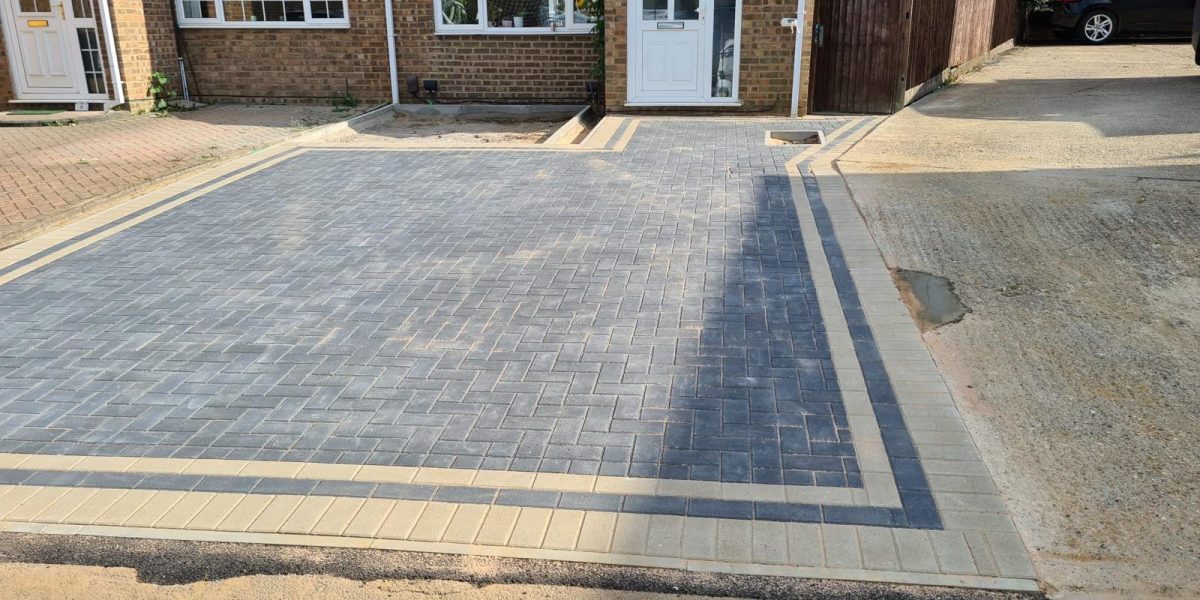
If you are thinking about replacing an old driveway or creating new off-road parking, one of the first questions is likely to be: how much will it cost?
There is no single fixed driveway price in Plymouth. Two driveways of the same size can cost very different amounts depending on the surface you choose, the condition of the ground, access to the property, drainage requirements, edging, excavation and the amount of waste that needs to be removed.
As a broad guide, professionally installed UK driveways commonly fall somewhere between the lower-cost end for gravel or simple tarmac and the higher end for detailed block paving, resin-bound finishes or projects needing substantial groundworks. The most reliable way to establish the cost for your property is a site survey and a detailed quotation.
For Plymouth homeowners, it is worth looking beyond the surface price alone. A driveway that has been properly excavated, supported by a suitable sub-base and designed to deal with rainwater can offer far better long-term value than a cheaper installation that needs repairing a few years later.
Driveway Cost in Plymouth: A Quick Guide
The table below gives broad UK guide ranges for a fully installed driveway. They are not fixed prices or a substitute for a local quotation.
| Driveway type | Typical guide range | Good for | What can increase the price |
| Gravel | Lower-cost option | Larger areas, traditional properties, good natural drainage | Edging, ground stabilisation, excavation |
| Tarmac | Lower to mid-range | Practical, hard-wearing driveways and larger parking areas | Drainage, kerbs, complex shapes, substantial base work |
| Block paving | Mid to higher range | Bespoke patterns, kerb appeal, repairable individual blocks | Premium blocks, patterns, borders, drainage, labour |
| Resin bound | Mid to higher range | Contemporary finish, low-maintenance appearance, permeable systems | Base preparation, colour/aggregate choice, edging, unsuitable existing base |
Why not give one exact price? Because the visible surface is only part of the job. A quotation can change significantly once the contractor has assessed the existing ground, levels, drainage route, access for machinery and whether old concrete, tarmac, soil or paving needs to be removed.
What Affects the Cost of a New Driveway?
1. The size of the driveway
The larger the driveway, the more material and labour it will require. However, the price per square metre does not always increase in a straight line. Some costs – such as bringing machinery to site, skips and site set-up – are partly fixed, so a larger driveway can sometimes have a slightly lower rate per square metre than a very small one.
When comparing quotes, make sure each contractor is pricing the same total area. A few extra metres for turning space, paths, widened entrances or decorative borders can make a noticeable difference.
2. The surface you choose
Material choice is one of the biggest influences on driveway cost. Gravel is usually one of the most economical options, while block paving and resin-bound surfaces often involve more material preparation and skilled installation. Tarmac tends to sit between the two, depending on the specification and scale of the project.
If you are still comparing surfaces, see our driveways in Plymouth page for an overview of block paving, resin, tarmac and gravel options.
3. Excavation and ground preparation
A long-lasting driveway depends heavily on what sits underneath it. If the existing surface is failing, the ground is soft, levels need changing or the old driveway must be removed completely, the groundwork can form a significant part of the quote.
This is also one of the areas where apparently cheap quotations can be misleading. Reducing excavation depth or using an inadequate sub-base may lower the initial price, but it can increase the risk of settlement, movement and premature repairs.
4. Drainage
Plymouth homeowners also need to consider how rainwater will leave the driveway. The right solution depends on the surface, the slope of the property and where water can safely drain.
For front gardens in England, permeable surfacing or directing rainwater to a permeable area can help a project fall within permitted development rules. Traditional impermeable surfacing over more than five square metres may require planning permission if suitable drainage is not provided.
For more detail, read our guide to driveway drainage rules for Plymouth homeowners.
5. Access to the property
Easy access for diggers, deliveries and waste removal can make installation more straightforward. Narrow entrances, limited parking, awkward levels or restricted access can mean more manual labour, smaller machinery or additional handling.
6. Edging, borders and design details
A simple rectangular driveway will generally be more economical than a detailed design with contrasting borders, curves, steps, retaining work or several different paving materials. These features can add character and kerb appeal, but they also add cutting, labour and material costs.
7. Removing the existing driveway
If an old concrete slab, damaged tarmac, loose paving or large quantities of soil need to be excavated and taken away, disposal costs need to be included. Always check whether removal and lawful waste disposal are covered in the quotation rather than assuming they are included.
How Much Does a Driveway Cost by Size?
Driveway size is useful for early budgeting, but it should be treated as a starting point rather than a final price. For example, a straightforward double driveway laid on suitable ground may cost considerably less than a similar-sized driveway requiring major excavation, drainage channels and retaining work.
| Example size | Typical use | Budgeting considerations |
| Around 15–20 m² | Compact or single-car driveway | Small areas can have a higher cost per m² because site set-up costs are spread across less space. |
| Around 30–50 m² | Typical one-to-two-car driveway | Material choice, drainage and ground preparation usually have the biggest impact. |
| 60 m² and above | Larger driveways or multiple vehicles | Material quantities rise, but economies of scale may reduce some per-m² costs. |
Which Driveway Is the Best Value?
The cheapest driveway to install is not automatically the best value. A better question is: which surface gives the right balance of price, appearance, maintenance and lifespan for your property?
Gravel
Gravel can be an affordable and naturally permeable choice, particularly for larger driveways. It suits many traditional homes and is relatively straightforward to refresh. The trade-off is that loose stone can move, weeds may need managing and occasional topping-up may be required.
Tarmac
Tarmac is practical, durable and well suited to driveways that need to cope with regular vehicle use. It offers a clean, simple finish and can be cost-effective for larger areas. Decorative edging can be added if you want a more bespoke appearance.
Block paving
Block paving normally costs more than a basic gravel or tarmac finish, but it offers far more choice in colours, patterns and borders. Individual damaged blocks can also be lifted and replaced, which can make future repairs easier.
Resin bound
Resin-bound driveways are popular with homeowners looking for a smooth, contemporary finish with a wide choice of aggregate colours. When installed as a suitable permeable system on the correct base, resin can also help manage surface water effectively. The condition and suitability of the base are important, so not every existing driveway is suitable for a simple overlay.
Can You Save Money by Resurfacing Instead of Replacing?
Sometimes. If an existing driveway has a structurally sound base, resurfacing or an overlay may be possible. This can reduce excavation and disposal costs. However, laying a new surface over a failing base simply hides the problem and may lead to cracking, movement or drainage issues later.
Before deciding, the existing driveway should be checked for movement, major cracking, poor levels, standing water and weak edges. Where those problems are significant, full replacement is usually the more sensible long-term solution.
What Should Be Included in a Driveway Quote?
A useful quotation should explain what you are paying for, not simply provide one total figure. Ask whether the price includes:
- excavation and removal of the existing surface
- waste disposal
- sub-base preparation and compaction
- the specified driveway surface and materials
- edging or kerbs
- drainage or channels where required
- steps, manhole adjustments or level changes where applicable
- labour and machinery
- site clearance at completion
- any workmanship guarantee offered by the contractor
If two quotations are very different, compare the specification rather than the final figure alone. One contractor may have included excavation, drainage and stronger ground preparation while another has priced only the visible surface.
Do You Need Planning Permission for a New Driveway?
Not every driveway requires planning permission, but drainage and access rules matter. In England, a new or replacement front driveway using a permeable surface – or one that directs water to a lawn, border or other suitable permeable area – will often fall within permitted development rules. Traditional impermeable surfacing over more than five square metres can require planning permission where runoff is not dealt with appropriately.
A new vehicle access may also require a dropped kerb application. Local restrictions, listed buildings and other planning considerations can affect individual properties, so it is sensible to check before work begins.
See our full guide: Do You Need Planning Permission for a New Driveway in Plymouth?
How to Keep Your Driveway Budget Under Control
A good driveway does not have to include every premium feature. If you are working to a budget, focus first on the elements that affect performance: proper ground preparation, drainage, strong edges and a surface suitable for the way you use the space.
- Keep the layout simple if complex curves and decorative cuts are not essential.
- Choose a surface that suits both your budget and expected maintenance.
- Ask whether the existing base can be reused – but only if it is genuinely sound.
- Get the drainage right at the design stage rather than trying to solve water problems later.
- Compare like-for-like quotations and check exactly what is included.
For additional cost-saving ideas, read Plymouth Driveways on a Budget: Balancing Cost with Local Expertise.
How Can You Get an Accurate Driveway Cost for Your Plymouth Home?
Online cost guides are useful for setting an initial budget, but a driveway is a site-specific project. The most accurate price comes from assessing the area in person.
A site visit allows a contractor to look at the size and shape of the driveway, existing surface, ground levels, access, drainage and the finish you want. It also gives you the opportunity to discuss where vehicles will park, whether you want decorative borders and how the new driveway should work with the rest of the property.
Bespoke Driveways & Patios provides driveway and paving services across Plymouth and surrounding areas. You can explore our Plymouth paving contractor services or contact us for a free, no-obligation quotation.
Planning a New Driveway in Plymouth?
The best driveway is not simply the one with the lowest initial price. It is the one that is designed for your property, prepared properly underneath and built to handle daily use and Plymouth’s weather for years to come.
Whether you are considering block paving, resin bound, tarmac or gravel, start with a clear idea of your priorities and ask for a detailed quotation that covers the whole installation – not just the surface.
Ready to discuss your driveway? Contact Bespoke Driveways & Patios for a free, no-obligation site survey and quotation in Plymouth and the surrounding areas.
Frequently Asked Questions About Driveway Costs in Plymouth
How much does a new driveway cost in Plymouth?
The cost depends on the driveway size, chosen surface, ground condition, drainage, access and finishing details. Gravel and straightforward tarmac are generally among the lower-cost options, while bespoke block paving and resin-bound installations can cost more. A site survey is the best way to get an accurate price.
What is the cheapest type of driveway?
Gravel is often one of the cheapest surfaces to install and is naturally permeable. Tarmac can also be cost-effective, particularly over larger areas. The cheapest initial option is not always the lowest-cost option over the full life of the driveway, so maintenance and durability should also be considered.
How much does a driveway cost per square metre?
Per-square-metre guides are useful for early budgeting, but they can be misleading if groundworks, drainage and waste removal are excluded. A smaller driveway may also have a higher rate per square metre because site set-up costs are spread across a smaller area.
Is resin more expensive than block paving?
The final cost can be similar depending on the specification. Resin pricing depends heavily on the condition of the base and the aggregate system used, while block paving costs vary with the block type, pattern, borders and labour. The best comparison is a like-for-like quotation for the same property.
Does drainage add to the cost of a driveway?
It can. Drainage channels, soakaways, permeable construction or level changes may add to the installation cost, but dealing with water correctly at the outset can help prevent standing water, damage and planning problems later.
Can I put a new driveway over my old one?
Sometimes, but only when the existing base is stable, correctly drained and suitable for the new surface. Overlaying a cracked, moving or poorly drained driveway can shorten the life of the new finish.
Do I need planning permission for a driveway in Plymouth?
Many new or replacement driveways can be installed without planning permission when permeable surfacing is used or runoff is directed to a suitable permeable area. Different rules can apply to impermeable front-garden surfacing, dropped kerbs, listed buildings and properties with restricted permitted-development rights, so check the requirements for your property.