
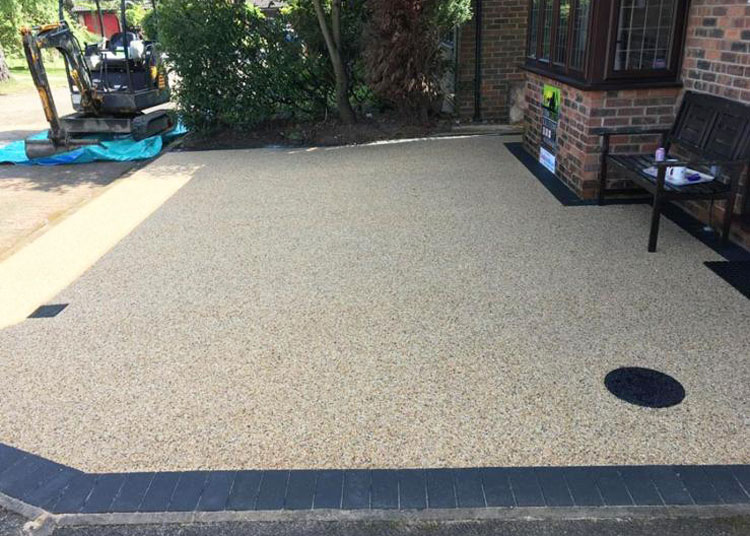
Yes, resin bound surfacing can sometimes be laid over an existing concrete or tarmac driveway. The base must be suitable for the selected system and expected traffic, with its condition, drainage and finished levels assessed before work begins.
If your driveway looks tired but remains sound, an overlay may be worth exploring. If it is moving, breaking up or holding water, those issues need investigation first. A new finish does not remove the cause of a failing base.
For Plymouth homeowners considering resin over a concrete driveway, the first step is an assessment of what is already there.
What a resin overlay involves
An overlay retains a suitable existing base and adds a resin bound wearing surface after preparation. It can reduce the amount of removal required, but preparation may still include cleaning, local repairs and adjustments to edges or drainage features.
The installer should explain which parts of the existing construction will remain and why they are suitable. A photograph can help with an initial enquiry, but it cannot establish the condition of every layer beneath the driveway.
Can resin be laid over concrete
Concrete can provide a base for resin bound surfacing when it is suitable for the system. Its condition and any joints need careful consideration. A slab that appears sound in one area may have cracking or movement elsewhere.
The supplier’s guidance on resin bound bases identifies concrete and asphalt among possible base materials, while stressing stability and suitability for the intended load.
Drainage is a separate question. A porous resin surface laid over impermeable concrete does not create a fully permeable driveway. The design must explain how water will be managed.
Can resin be laid over tarmac
A sound tarmac or asphalt base may also be suitable, subject to the resin manufacturer’s requirements. Loose material, deteriorating areas and contamination need to be identified before installation.
It helps to distinguish superficial ageing from a base that is losing integrity. Ask the installer to explain the evidence for retaining it and what preparation is included. If repairs are proposed, the quotation should describe their extent rather than simply stating that resin will cover the driveway.
What an installer checks before recommending an overlay
Stability and signs of movement
Cracks, depressions and changes in level can indicate problems that need further investigation. Movement below a resin surface can produce cracking in the finish. An assessment should consider the cause, not just whether a crack can be filled.
Existing joints and damaged areas
Concrete joints cannot simply be ignored. Their treatment must follow the selected system’s guidance so movement is appropriately accommodated. Repairs also need a clear specification and a sound surrounding base.
Water movement
The survey should consider where rainwater collects and where it leaves the site. Existing puddles are useful information to share with the installer. Take photographs after rain if the problem is intermittent.
Finished height and access
The added surface changes finished levels. Check how it will meet door thresholds, garage entrances, drainage channels and covers. Beside the house, damp-proofing details must be considered too.
Derbyshire Specialist Aggregates’ site survey guidance covers movement, joints, drainage and threshold details. These checks should be interpreted by the installer for the actual property and system.
How the existing surface is prepared
Preparation follows the assessment and the manufacturer’s installation requirements. The driveway needs to be free of material or contamination that could interfere with the new surface. Cleaning must be followed by sufficient drying, and any required repairs need completing before surfacing begins.
The supplier’s surface preparation guidance covers cleaning, repairs, edging and levelling. The exact method depends on the chosen product and site; homeowners should receive a description of the proposed work rather than a generic promise to prepare the base.
Ask when you can walk and park on the completed driveway. The programme needs to account for preparation and curing, with any weather-related changes explained before work starts.
When retaining the base may be the wrong choice
An overlay needs reconsideration if the assessment finds widespread movement, significant deterioration, unsuitable levels or drainage problems that cannot be resolved within the proposed design.
Replacing the base may involve more work, but it also allows the construction to be designed around the driveway’s current requirements. Bespoke’s driveway installation service is a relevant starting point if a new construction is needed.
Existing block paving is not equivalent to a concrete or asphalt base. Individual units and their joints can move, so they should not be assumed suitable for a conventional resin bound overlay. Ask for a system-specific recommendation before agreeing to cover them.
Does a resin overlay need planning permission
Permission depends on the property and proposed work, including drainage. Resin should not be described as automatically exempt.
For houses in England, the Planning Portal’s front garden guidance explains the distinction between permeable surfacing or runoff to a suitable permeable area and impermeable paving exceeding five square metres without that provision. Restrictions and separate access works can affect the position.
Check with Plymouth City Council where necessary. Bespoke’s existing planning permission guide provides further local context.
Questions to ask about your quotation
- Why is the existing base considered suitable?
- Which repairs and preparation are included?
- How will water be managed through or across the finished construction?
- What happens at joints, edges and door thresholds?
- What does the guarantee cover when the existing base is retained?
These questions help you compare the proposed work. A cheaper overlay is only useful if the retained construction is appropriate for it.
Arrange an assessment of your existing driveway
If you are considering resin over concrete or tarmac, contact Bespoke Driveways and Patios to discuss your Plymouth property. You can also explore the company’s resin driveway service before requesting advice and a quotation.
Frequently asked questions
Will resin hide cracks in my concrete driveway
It may cover their appearance, but that does not resolve their cause. Cracks should be assessed and treated appropriately, especially where there is movement. Some bases need replacement rather than covering.
Does resin over concrete improve drainage
Not automatically. The resin surface may allow water through, but impermeable concrete beneath it still affects the route water can take. Drainage must be assessed as part of the complete construction.
Can resin be laid directly over block paving
Do not assume it can. Supplier guidance advises against conventional resin bound surfacing over paving units because movement can affect the finish. Obtain a recommendation for the actual construction and system.
Is an overlay always cheaper than a new driveway
No. Retaining a suitable base may reduce removal and groundwork, but repairs, level adjustments and drainage work affect the total. Compare complete quotations with the same scope and clear exclusions.
Can suitability be confirmed from photographs
Photographs can show visible damage and layout, but they cannot reliably establish the supporting construction or all signs of movement. A site assessment is needed before a firm installation recommendation.