
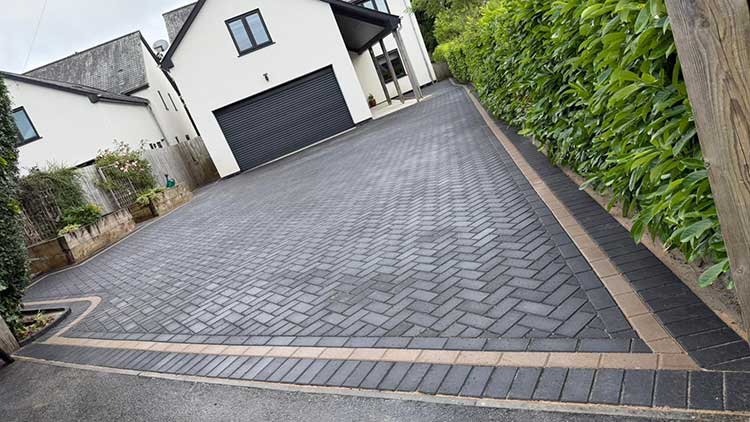
An old driveway can quickly make the front of a home look tired. Cracks, uneven areas, loose blocks and standing water are not just cosmetic problems either. Over time, they can make the surface harder to use and may lead to more expensive repairs if they are ignored.
The tricky part is knowing whether your driveway simply needs a repair or whether replacing it altogether would be the better investment.
For homeowners in Plymouth, the right decision usually comes down to the age of the driveway, the type of damage, how widespread the problem is, and what you want from the space in the future.
Here are the main things to consider before deciding whether to repair or replace an old driveway.
When is repairing a driveway enough?
A repair can be the sensible option when the damage is limited to a small area and the rest of the driveway is still in good condition.
For example, you may only need a repair if:
- a few paving blocks have become loose
- there is one small sunken area
- a minor crack has appeared
- some joints need re-sanding
- a section has been stained or damaged
- the surface has become untidy but is still structurally sound
In these cases, repairing the affected section can improve the appearance and performance of the driveway without the cost of a full replacement.
This is particularly true with block paving, where individual blocks can often be lifted, adjusted and relaid.
Signs your driveway may need replacing
There comes a point where repairing an old driveway stops being cost-effective.
If the same problems keep returning, or the damage affects a large part of the surface, replacement may make more sense.
Common signs include:
- widespread cracking
- several sunken or uneven areas
- poor drainage across the driveway
- frequent puddling
- loose or unstable paving
- large areas of surface deterioration
- repeated repairs that no longer solve the problem
A driveway that has reached the end of its useful life may continue to develop new issues, even after individual repairs.
In that situation, spending more money on small fixes can become a false economy.
Look at what is happening underneath the surface
One of the most important things to understand is that driveway problems are not always caused by the surface itself.
Sometimes the real issue is underneath.
Poor ground preparation, an inadequate sub-base or movement below the surface can lead to sinking, cracking and uneven areas. If the foundation is failing, simply repairing what you can see may only provide a temporary solution.
This is why a professional assessment can be useful. An experienced driveway contractor can often tell whether the damage is limited to the surface or whether the underlying structure needs more attention.
Consider the age of the driveway
Age is another useful factor when deciding whether to repair or replace.
A relatively new driveway with one damaged section is usually worth repairing. On the other hand, an older driveway that has already needed several repairs may be nearing the point where replacement offers better value.
There is no single lifespan that applies to every driveway. It depends on the material, the original installation, drainage, usage and ongoing maintenance.
The important question is whether the existing driveway still has enough life left in it to justify spending more money on repairs.
Are drainage problems becoming a regular issue?
Drainage is one of the clearest signs that a driveway may need more than a cosmetic repair.
If water regularly collects on the surface, runs towards the property, or sits in low areas after rainfall, there may be a problem with the levels or the structure beneath the driveway.
A small drainage issue may be fixable, but if poor drainage affects a large part of the area, replacing the driveway can give you the opportunity to correct the problem properly.
For Plymouth homes, where wet weather is common, effective drainage should be part of any long-term driveway solution.
Think about how your needs have changed
Sometimes a driveway still works, but no longer works well for the household.
You may now need:
- space for an extra vehicle
- easier access
- a wider entrance
- a lower-maintenance surface
- better drainage
- a more modern appearance
- improved kerb appeal
In these situations, repairing the existing driveway may not solve the real problem.
Replacing it gives you the chance to redesign the space so it better suits how you use your home today.
Which option gives better long-term value?
A repair will almost always cost less in the short term.
However, the cheapest option today is not always the best-value option over several years.
If a driveway only needs a small repair and the rest is sound, repairing it is usually sensible. But if you are spending money every year on new problems, replacement may be the more economical choice.
A new driveway can also provide other benefits, including:
- improved kerb appeal
- better drainage
- easier maintenance
- a safer and more even surface
- a design better suited to the property
This is why it helps to think beyond the immediate repair cost.
Can cleaning restore an old driveway?
Not every tired-looking driveway needs structural work.
Sometimes the surface simply looks older because of dirt, moss, weeds or staining. In those cases, professional cleaning or power washing may be enough to give it a much fresher appearance.
Cleaning can be a good first step if the driveway is still level, stable and structurally sound.
However, it will not solve deeper problems such as sinking, cracking or poor drainage.
Repair or replace: a simple way to decide
A useful way to look at it is this:
Repair the driveway if the problem is small, isolated and the rest of the surface is still in good condition.
Consider replacement if the damage is widespread, recurring or linked to poor groundwork or drainage.
If you are unsure, getting an experienced contractor to inspect the area can help you avoid spending money on the wrong solution.
Why professional advice matters
It is easy to judge a driveway based on what you can see, but experienced installers often spot problems that are not immediately obvious.
A professional can assess:
- the condition of the surface
- the stability of the base
- drainage
- edging
- levels
- whether repairs are likely to last
This can help you make a more informed decision and avoid unnecessary work.
Final thoughts
There is no one-size-fits-all answer to whether you should repair or replace an old driveway.
If the damage is minor and the rest of the driveway remains strong, a targeted repair may be all that is needed. But when problems are widespread, keep returning, or affect drainage and stability, replacement can offer better long-term value.
At Bespoke Driveways & Patios, we help homeowners in Plymouth assess their existing driveways and choose a practical solution based on the condition of the surface, the property and the budget.
If your driveway is cracked, uneven or simply looking past its best, get in touch with us to discuss whether a repair or a new driveway would be the right option for your home.