
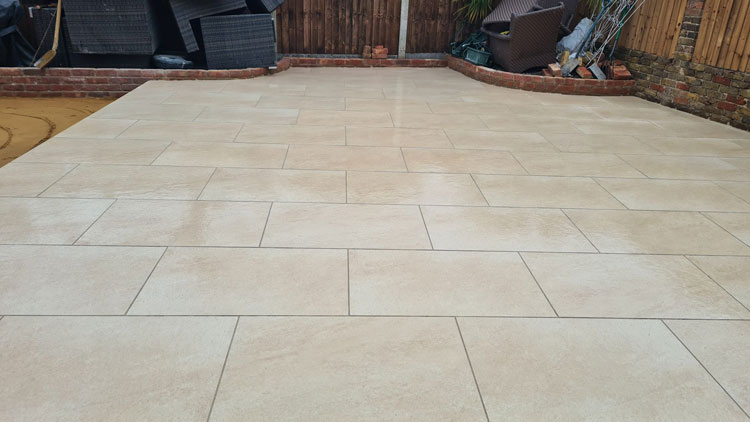
A small patio does not have to feel cramped. With the right paving, layout and design choices, even a compact outdoor space can feel brighter, more open and far more inviting.
For many Plymouth homeowners, the key is not simply adding more paving. It is choosing the right style and using the available space carefully. The colour of the slabs, the laying pattern, the size of the paving and the way the patio connects with the rest of the garden can all make a surprisingly big difference.
If you are planning a new patio or refreshing an existing one, here are some smart paving ideas that can help make a small garden feel much bigger.
1. Choose larger paving slabs
One of the easiest ways to make a small patio feel more spacious is to use larger paving slabs.
Smaller slabs create more joints and more visible lines, which can make the space feel busier. Larger-format paving gives the eye fewer interruptions, helping the patio look cleaner and more open.
This works especially well in compact Plymouth gardens where you want a modern, uncluttered finish.
Large porcelain or natural stone slabs can both work well, depending on the style of the property and the look you want to achieve.
2. Keep the colour palette light and simple
Colour has a big impact on how spacious a patio feels.
Lighter paving shades such as soft grey, warm beige and pale stone tones can help reflect more natural light and make the area feel brighter. Darker paving can look stylish, but in a very small garden it may sometimes make the space feel more enclosed.
That does not mean everything needs to be the same colour. A subtle border or a slightly darker edge can still add definition without making the design feel too busy.
The key is to keep the overall palette calm and consistent.
3. Use a simple laying pattern
A complicated paving pattern can look impressive in a large space, but it can overwhelm a smaller patio.
Simple layouts usually work better.
Straight laying patterns, long clean lines and consistent spacing can make the patio feel more organised and visually wider. A diagonal pattern can also help draw the eye across the space and create the impression of greater depth.
The best layout will depend on the shape of the garden, but simplicity is usually the safest approach.
4. Run the paving in the direction you want the eye to travel
The direction of the paving can subtly influence how large the patio feels.
If you want a narrow garden to appear wider, laying rectangular slabs across the width can help. If the garden is short, laying them lengthways can create a stronger sense of depth.
This is a small design detail, but it can make a real difference to the overall feel of the space.
A good paving contractor will usually take the shape and proportions of the garden into account before recommending a layout.
5. Create a smooth flow from indoors to outdoors
One of the best ways to make a small patio feel bigger is to make it feel connected to the house.
If the paving colour or style complements the flooring inside, the transition between indoors and outdoors feels more seamless. This can make both areas appear larger because the eye reads them as one continuous space.
This works particularly well with patio doors, bi-fold doors and large windows.
Porcelain paving is often a good choice for this style because it can create a clean, modern finish that works well with contemporary interiors.
6. Avoid overcrowding the patio
Even the best paving design can feel small if the area is packed with too much furniture, too many pots or unnecessary decorative features.
A compact patio usually benefits from a simpler approach.
Choose furniture that fits the space properly, keep pathways clear, and avoid blocking sightlines across the garden. A few carefully chosen features often look far better than trying to fill every corner.
This also makes the patio easier to use day to day.
7. Use borders carefully
Borders can add character to a patio, but they need to be handled carefully in a small space.
A wide or highly contrasting border can make the patio feel boxed in. Instead, choose a narrow border or one that is only slightly darker than the main paving.
This can still give the design a neat, finished appearance without visually shrinking the area.
Subtle edging can also help connect the patio with paths, planting beds or other paved areas.
8. Keep planting around the edges
Plants add softness and colour, but where you place them matters.
Rather than using large planters in the middle of the patio, try keeping planting around the edges. Raised beds, slim borders and wall-mounted planters can all add greenery without taking up valuable floor space.
This leaves more of the paving visible and helps the patio feel more open.
Vertical planting can also work very well in small Plymouth gardens, especially where floor space is limited.
9. Use paving to create zones without adding walls
Even in a small garden, it can help to define different areas.
For example, you might use one part of the patio for dining and another for relaxing. The trick is to create these zones subtly, without introducing physical barriers that make the space feel divided.
A slight change in paving direction, a narrow border or a small planting strip can help separate areas while keeping the overall layout open.
This gives the garden more function without making it feel smaller.
10. Think carefully about the shape of the patio
A small garden does not always need a perfectly square or rectangular patio.
Curved edges can sometimes make a compact garden feel softer and more natural. They can also help avoid awkward corners and create a smoother connection with planting or lawn areas.
In other gardens, clean straight lines may work better.
The best shape is the one that suits the property and makes the most of the available space.
11. Choose low-maintenance paving
A small patio tends to look its best when it is clean and uncluttered.
That is why low-maintenance paving can be a smart choice. Materials such as porcelain are popular because they are easy to clean and maintain a tidy appearance with relatively little effort.
Natural stone can also look beautiful, especially in more traditional settings, but it may require a little more ongoing care depending on the finish.
Choosing a material that suits your lifestyle can help the patio continue to look fresh and spacious over time.
12. Good installation makes a big difference
The paving itself is only part of the job.
A professionally installed patio will usually look more balanced, more level and more polished. Good workmanship also helps with drainage, edging and long-term performance.
In a small space, details are even more noticeable. Uneven joints, poor levels or untidy edges can make the whole area feel less refined.
This is why professional installation is worth considering if you want the finished patio to look its best.
Final thoughts
A small patio can still feel stylish, spacious and practical with the right design.
Larger paving slabs, lighter colours, simple layouts and careful furniture choices can all help create a more open feel. The goal is to reduce visual clutter, make the most of the available space, and choose paving that works naturally with the rest of the garden.
At Bespoke Driveways & Patios, we help homeowners in Plymouth create patios that are designed around the way they live and the space they have available. Whether you are working with a compact courtyard or a small back garden, we can help you choose the right paving, layout and finish to make the area feel bigger and work better.
If you are planning a new patio in Plymouth, get in touch with us to discuss your ideas and find the best solution for your outdoor space.